2026 Best Aluminium Heatsink Options for Efficient Thermal Management?
In modern electronics, proper thermal management is crucial for device performance and longevity. Aluminium heatsinks are widely recognized for their effectiveness in dissipating heat. They are lightweight, durable, and cost-efficient. Many manufacturers prefer aluminium for its excellent thermal conductivity and ease of shaping.
However, not all aluminium heatsink options are created equal. Choosing the right design involves careful consideration of various factors, such as surface area, structure, and intended application. Misjudgments in selecting a heatsink can lead to overheating issues, reducing the efficiency of electronic devices.
This article delves into the best aluminium heatsink options available in 2026. It aims to provide insights into advanced designs, material choices, and application effectiveness. Whether you are a seasoned engineer or a DIY enthusiast, understanding these options can significantly impact your projects. The right aluminium heatsink not only prevents thermal failure but also enhances overall performance.

Top Factors to Consider When Choosing Aluminium Heatsinks in 2026
When selecting aluminium heatsinks in 2026, several critical factors must be considered. Thermal conductivity stands out as a primary concern. According to a recent industry report, aluminium heatsinks can achieve thermal conductivities between 150 and 250 W/mK. Understanding the specific thermal requirements of your application is vital. A proper analysis can help select an optimal material with an appropriate thermal performance level.
Another important aspect is the heatsink's design and fin arrangement. A well-designed heatsink with strategic fin spacing can improve airflow and heat dissipation. Research indicates that an increase in surface area can enhance cooling efficiency by 20% or more. It is essential to balance the size and weight of the heatsink with its thermal performance. Oversized heatsinks can be cumbersome, affecting overall system efficiency.
Finally, consider the manufacturing process. Methods like extrusion and machining come with different benefits and costs. Extruded heatsinks often provide better cost efficiency, but they may lack the precision of machined options. Choosing the right manufacturing method impacts both performance and budget. Making these decisions requires careful thought and may lead to revisions in design or material choice. Keeping up with trends and technology updates within the thermal management sector can provide invaluable insights.
Types of Aluminium Heatsinks: Extruded, Forged, and Sintered Options
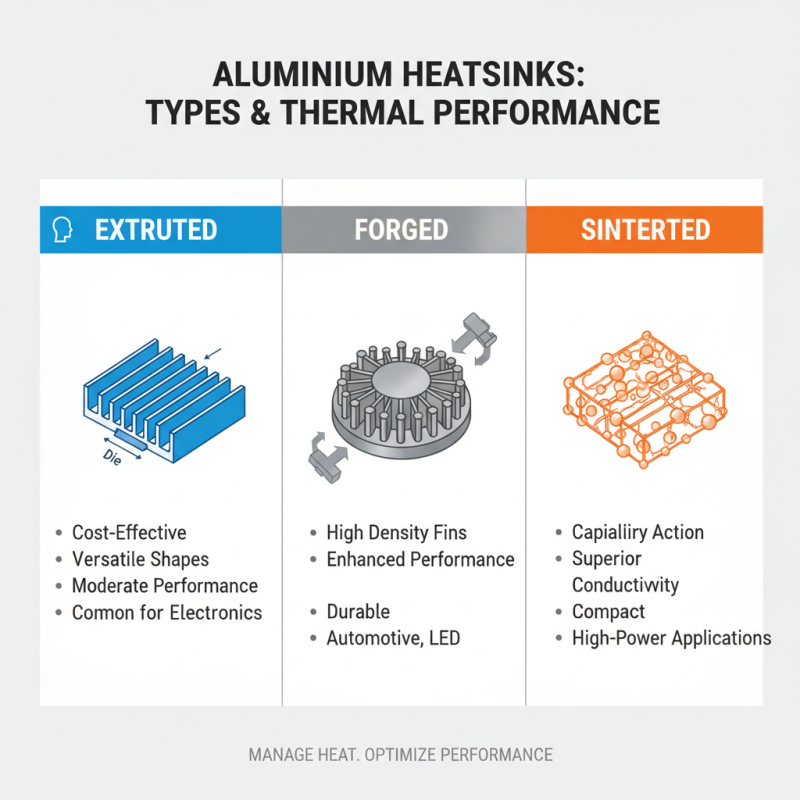
When managing heat, the choice of aluminium heatsink is crucial. There are three main types: extruded, forged, and sintered heatsinks. Each type has unique characteristics that can impact thermal performance.
Extruded heatsinks are commonly used due to their cost-effectiveness and versatility. They are made by forcing heated aluminium through a die. This process results in complex shapes that maximize surface area. However, the extrusion process can limit the thickness of the heatsink. For applications needing thicker or denser materials, this may not be ideal.
Forged heatsinks, on the other hand, offer superior strength and durability. They are crafted through a process that compresses aluminium under high pressure. This method improves thermal conductivity significantly. However, it can be a more expensive option compared to extruded heatsinks.
Sintered heatsinks are less common but have their merits. They are created by compacting fine aluminium powders and heating them to form a solid piece. This allows for intricate designs. But the sintering process can result in porosity, which may affect thermal performance. Choosing the right type requires careful consideration of both budget and performance needs.
Performance Metrics: Evaluating Thermal Conductivity and Heat Dissipation
When it comes to thermal management, aluminium heatsinks are a popular choice due to their superior thermal conductivity. Research indicates that the thermal conductivity of aluminium can range from 205 to 235 W/mK. This range is significant for electronic applications, where heat dissipation is crucial. Using aluminium heatsinks, devices can maintain optimal temperatures, thus enhancing their performance and longevity.
Evaluating heatsink options involves considering metrics like heat dissipation rate. A study shows that effective heatsinks can remove over 100 W of heat per square meter. This performance is dependent on design, surface area, and airflow. For instance, a well-designed heatsink can significantly increase heat transfer efficiency compared to a poorly designed one. However, balancing materials and geometry often poses challenges. Overlooked factors can lead to inefficient designs, which fail to meet the required cooling demands.
One critical aspect in heatsink performance is the fin design. Fins improve surface area but can complicate airflow. Optimal spacing is essential. Too tight and airflow is restricted; too wide and efficiency drops. This intricate balance highlights the importance of engineering in thermal management. Advanced simulations and tests can fine-tune these designs and provide insights into real-world performance.
Innovative Design Trends in Aluminium Heatsink Manufacturing for 2026
In 2026, innovative design trends in aluminium heatsink manufacturing are more crucial than ever. Efficient thermal management is a top priority. Designers focus on enhancing airflow and optimizing surface area. Extrusion and machining techniques have evolved, allowing for complex shapes that improve heat dissipation. This is critical for various applications, from electronics to automotive components.
Many manufacturers now explore the use of advanced materials and finishes, such as anodizing. Anodized surfaces can increase thermal conductivity. However, achieving consistency in these finishes remains a challenge. Some designs prioritize aesthetics, but performance must not be overlooked.
Sustainable practices in aluminium sourcing are gaining traction in this field. However, balancing cost-effectiveness with eco-friendly methods requires careful planning. Innovations may also lead to higher initial costs, which can deter adoption. Each design choice has its trade-offs, making it essential to find the right balance for thermal performance and cost.
2026 Aluminium Heatsink Efficiency Comparison
Best Practices for Integrating Aluminium Heatsinks into Thermal Management Systems
When integrating aluminium heatsinks into thermal management systems, consider the design and placement carefully. Heatsinks need to maximize surface area for effective heat dissipation. This means fins should be oriented to allow proper airflow. Avoid obstructing airflow paths; even small elements can hinder performance.
Choosing the right thickness for the heatsink is crucial. Thicker materials can absorb more heat but may increase weight. Balance is key. Proper mounting techniques also play a role. Use thermal adhesives or screws that ensure a solid connection between the heatsink and the component it cools.
Keep in mind that not all heatsinks perform equally. Factors like environmental conditions can affect efficiency. Regular assessments might reveal that a heatsink is not meeting thermal requirements. Adjustments could be necessary, such as adding fans or improving ambient airflow. Failing to monitor these systems might lead to overheating, which can cause damage or inefficiency. Regular checks can enhance system reliability and performance.