Why Are Aluminium Applications Essential for Modern Industries?
In the modern industrial landscape, Aluminium Applications are pivotal. According to Dr. Sarah Thompson, a leading expert in materials science, "The versatility of aluminium reshapes industries." This statement underscores aluminium's significance across various sectors.
Aluminium Applications enhance efficiency and sustainability. In construction, this metal is lightweight yet durable. This quality reduces transport costs and energy use. In aerospace, aluminium's strength-to-weight ratio is crucial for flight efficiency. The automotive industry benefits from aluminium's recyclability, aligning with green initiatives. However, challenges remain. The environmental impact during production raises concerns about sustainable practices.
Innovative uses for aluminium continue to emerge. From packaging to electronics, the material proves essential. As industries evolve, aluminium's role may grow even more significant. Yet, questions linger about the balance between innovation and environmental responsibility. Addressing these issues is vital for the future of Aluminium Applications.

The Versatility of Aluminium in Modern Manufacturing
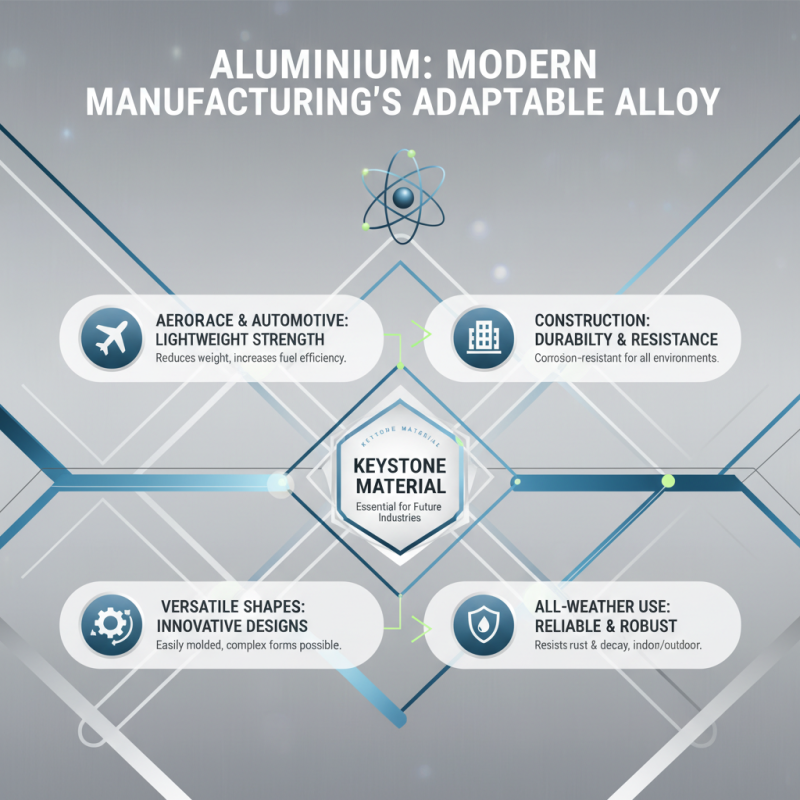
Aluminium has become a cornerstone of modern manufacturing due to its unique versatility. This lightweight metal is widely used in sectors such as aerospace, automotive, and construction. Its ability to withstand corrosion makes it ideal for both indoor and outdoor applications. Additionally, aluminium can be molded into various shapes, allowing for innovative designs and efficient manufacturing processes.
In the automotive industry, aluminium contributes to fuel efficiency. It reduces overall vehicle weight, leading to lower emissions. Similarly, in construction, aluminium frames provide strength without compromising aesthetics. The need for sustainable materials is pushing industries to adopt aluminium solutions, given its recyclability.
**Tips:** When working with aluminium, consider the thickness and type for specific applications. Not all grades are suitable for every purpose. Always assess the requirements first. Improper usage may limit its benefits.
Overall, aluminium’s adaptability paves the way for advancements. However, challenges exist in sourcing and production. The environmental impact of mining aluminium cannot be ignored. Industries must continuously reflect on their practices to ensure responsible use of this vital resource. Striving for a balance between innovation and sustainability is essential.
Key Properties That Make Aluminium Indispensable
Aluminium is a vital material for modern industries due to its unique properties. One significant characteristic is its lightweight nature. This quality enables manufacturers to reduce weight in vehicles and aircraft, thus increasing fuel efficiency. In the automotive sector, lighter cars consume less fuel, which directly supports environmental sustainability. The aerospace industry benefits similarly, with lighter aircraft allowing for higher payloads and lower emissions.
Another important property of aluminium is its corrosion resistance. This characteristic ensures that products maintain their strength and appearance over time. Industries like construction and packaging heavily rely on this trait. Buildings and structures made from aluminium are likely to outlast their steel counterparts in certain environments. However, the environmental impact of aluminium extraction cannot be overlooked. Efforts to improve recycling processes are essential to mitigate the negative effects.
Furthermore, aluminium’s malleability is crucial. It can be easily shaped into various forms for diverse applications. This flexibility supports innovation in product design across multiple sectors, from electronics to consumer goods. Yet, the manufacturing process has room for improvement to achieve better energy efficiency. Companies must focus on reducing emissions and waste during production. This ongoing challenge highlights the need for continuous efforts in refining aluminium applications.
Key Properties of Aluminium in Modern Industries
Applications of Aluminium Across Various Industries
Aluminium has become a cornerstone material in various industries. Its lightweight nature, excellent strength, and corrosion resistance make it a preferred choice in sectors like aerospace, automotive, and construction. According to the International Aluminium Institute, global aluminium demand is projected to reach 74 million tonnes by 2025. This trend underlines the material's critical role in facilitating innovation and sustainability.
In the automotive industry, aluminium use can reduce vehicle weight by up to 50%. Lighter cars achieve better fuel efficiency, which is vital as emissions standards become stricter. Interestingly, 70% of aluminium produced is recycled, showcasing its sustainability. However, despite these advantages, manufacturers face challenges in balancing performance and cost.
**Tip:** Consider using aluminium alloys tailored for specific applications. These can enhance strength and durability without significantly increasing costs.
In construction, aluminium frames and cladding offer both aesthetic appeal and energy efficiency. The material can improve insulation, leading to lower energy consumption. However, architects sometimes struggle with integrating aluminium effectively into designs. While its benefits are clear, the industry still seeks innovative solutions to overcome limitations in sheer aesthetics.
**Tip:** Educate your team about the advantages of aluminium. Training can improve design integration and application efficiency.
Why Are Aluminium Applications Essential for Modern Industries?
| Industry |
Application |
Benefits |
| Aerospace |
Aircraft frames and components |
Lightweight, high strength-to-weight ratio |
| Automotive |
Engine parts, body panels |
Fuel efficiency, reduced emissions |
| Construction |
Structural frameworks, windows |
Durability, weather resistance |
| Electrical |
Cables, wiring |
Excellent conductivity, lightweight |
| Packaging |
Food and beverage cans |
Recyclable, lightweight |
| Consumer Electronics |
Smartphone casings, laptops |
Aesthetic appeal, heat dissipation |
Sustainability and Recycling of Aluminium in Industrial Use
Aluminium plays a critical role in modern industries, notably in sustainability efforts. Its lightweight nature and strength make it ideal for various applications, including transportation and construction. However, the focus on recycling is crucial. Aluminium can be recycled repeatedly without losing quality. This reduces energy consumption and raw material extraction, minimizing environmental impact.
Despite the advantages, recycling aluminium presents challenges. Many facilities lack efficient recycling processes. Some consumers may not fully understand their role in recycling efforts. This gap could lead to increased waste. Encouraging education on the recycling process can enhance participation rates. Industries must collaborate to implement effective recycling systems.
The journey of aluminium from product to recycling can be complex. Scrap aluminium needs sorting and cleaning before processing. Yet, not all regions have the infrastructure to manage this effectively. Addressing these issues is vital for sustainability in aluminium use. A more robust recycling network can ensure that aluminium remains a cornerstone of environmentally friendly industrial practices.
The Future of Aluminium: Innovations and Trends in Industry
Aluminium's role in modern industries is shifting towards innovative applications. This lightweight metal is valued for its strength and durability. Industries like aerospace and automotive prioritize aluminium for its ability to reduce weight. Lighter vehicles lead to better fuel efficiency and lower emissions.
The future holds exciting advancements in aluminium technology. Researchers are exploring new alloys that offer enhanced characteristics. These developments may improve corrosion resistance and weldability, crucial for various applications. Additionally, recycling processes are becoming more efficient. The industry aims for a closed-loop system to minimize waste and environmental impact.
However, challenges remain. Not all sectors embrace aluminium due to cost concerns or material limitations. There’s ongoing debate about its lifecycle impacts. Ensuring the sustainability of aluminium production itself is vital. These factors require ongoing research and collaboration to drive the industry forward.