


RQ-2
RQ-3
RQ-1
RQ-4

10 Best Aluminium T Slot Profiles for Global Buyers

Choosing the right Aluminium T Slot Profile can shape an entire project’s safety, cost, and assembly speed. Global buyers often compare more than appearance. They examine alloy grade, slot dimensions, wall thickness, surface finish, and supplier documentation.

This guide introduces ten strong options for workshops, automation frames, display systems, machine guards, and modular workstations. Each profile deserves practical evaluation under real conditions. A 40 × 40 mm section may suit a compact fixture, while a heavier 80 × 80 mm profile can support larger structures. However, load capacity depends on span, connectors, orientation, and vibration. Product descriptions alone are not enough.

Details matter.

Experienced buyers should request technical drawings, tolerance data, alloy information, and corrosion-resistance evidence before ordering. Anodized surfaces may look similar, yet finish thickness and color consistency can vary between manufacturers. Packaging also deserves attention, especially when long profiles travel across borders. Bent edges create delays and waste.

No option is perfect. A lighter profile may reduce shipping costs but limit rigidity. A premium section may improve performance but exceed a small project’s budget. This comparison considers those trade-offs, along with machining quality, accessory compatibility, availability, and after-sales support. It also recognizes that supplier reliability can change by region and order volume. The final choice should match the application, not simply the lowest quoted price.
10 Best Aluminium T Slot Profiles for Global Buyers

What Aluminium T-Slot Profiles Are and How They Work

What Aluminium T-Slot Profiles Are and How They Work

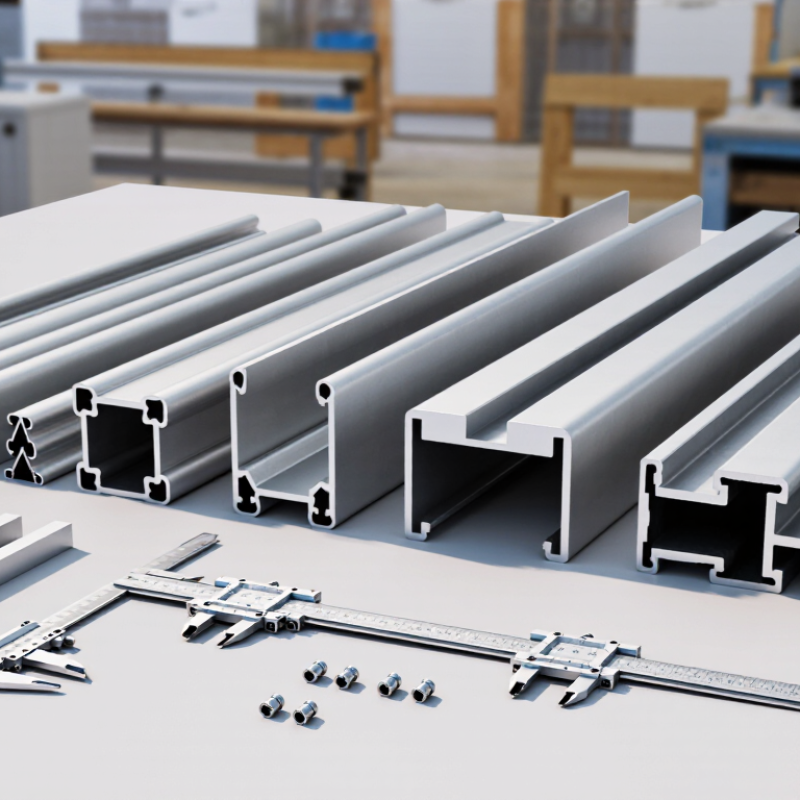
Aluminium T-slot profiles are extruded sections with continuous grooves along their sides. These grooves accept sliding nuts, bolts, brackets, and joining plates. Instead of drilling every connection, builders position fasteners inside the slot and tighten them where needed. The result is a modular frame that can be adjusted, expanded, or dismantled with ordinary hand tools.

Profile size, wall thickness, and alloy affect practical performance. A small 20-millimetre section may suit a light sensor stand, while a larger section can support guarding, worktables, or machine enclosures. However, size alone does not prove strength. Span length, joint quality, vibration, and load direction matter just as much. A poorly tightened corner can move, even when the profile looks substantial.

Clean assembly makes a noticeable difference. Cut ends should be deburred before connectors are fitted. A square, ruler, and torque-controlled driver help keep the frame accurate. Sliding nuts must engage the slot correctly; a partly engaged fastener may feel tight but remain unreliable. I still find this detail easy to underestimate. Check it twice. For heavier structures, engineers should verify deflection and connection loads against applicable design requirements. Aluminium also transfers vibration differently from steel, so rubber feet or bracing may be useful. The system is convenient, but convenience can encourage rushed design.

10 Best Aluminium T Slot Profiles for Global Buyers - What Aluminium T-Slot Profiles Are and How They Work

Selection based on common metric T-slot profile dimensions, structural versatility, fastening compatibility, and typical engineering applications. Mass values are approximate and may vary with profile geometry and supplier tolerances.
Rank Profile Size
(mm)
Typical Slot
Series
Approx. Mass
(kg/m)
Recommended Fastener Relative Structural Role Common Applications Why It Works Well
1 20 × 20 6 mm slot ≈ 0.43 M5 or equivalent Light-duty framing Instrument stands, guards, small enclosures, compact fixtures Low weight and small dimensions make it practical where space and ease of assembly matter most.
2 20 × 40 6 mm slot ≈ 0.66 M5 or equivalent Light-duty beam or upright Linear guide supports, small machine frames, shelves, access panels Its rectangular section provides more bending resistance in one direction than a 20 × 20 profile.
3 30 × 30 8 mm slot ≈ 0.82 M6 or equivalent General-purpose frame Workstations, safety guarding, test rigs, moderate-size fixtures A balanced choice between strength, weight, accessory availability, and cutting efficiency.
4 30 × 60 8 mm slot ≈ 1.30 M6 or equivalent Directional beam Longer spans, conveyor supports, machine bases, vertical columns The deeper section significantly improves stiffness along its strong bending axis without doubling the width.
5 40 × 40 8 mm slot ≈ 1.21 M8 or equivalent Medium-duty frame Machine frames, workbenches, robotic cells, protective structures Its square geometry provides useful stiffness in multiple directions and supports modular construction.
6 40 × 80 8 mm slot ≈ 1.92 M8 or equivalent High-stiffness beam Long machine beds, heavy worktables, guarding portals, conveyor structures The increased depth delivers better resistance to deflection for long horizontal spans.
7 45 × 45 10 mm slot ≈ 1.54 M8 or equivalent Medium-to-heavy frame Industrial workstations, automation frames, machine guarding, assembly tables The larger slot system allows robust joints and is well suited to frequently reconfigured structures.
8 50 × 50 10 mm slot ≈ 1.89 M8 or M10, depending on joint design Heavy-duty modular frame Large machine bases, safety fences, storage systems, structural platforms Offers a strong, symmetrical cross-section for frames that require higher joint capacity and rigidity.
9 60 × 60 10 mm slot ≈ 2.58 M10 or equivalent Heavy-duty support Large automation cells, equipment bases, access platforms, load-bearing frames The greater section size improves torsional and bending performance for large assemblies.
10 80 × 80 10 mm slot ≈ 3.55 M10 or equivalent Extra-heavy modular support Large machine frames, wide portals, heavy workstations, structural enclosures A large, stable cross-section is suitable when minimizing deflection is more important than low weight.
How aluminium T-slot profiles work: Each profile has longitudinal T-shaped grooves. Sliding nuts, drop-in nuts, brackets, hinges, panels, and other connectors fit into these grooves, allowing components to be positioned and fastened without drilling or welding. Common profiles use 6063-T5 or a similar architectural and structural aluminium alloy, usually with an anodized surface for improved wear resistance and corrosion protection.

Key Specifications for Comparing T-Slot Aluminium Profiles

Comparing the 10 best aluminium T-slot profiles starts with the alloy and temper. Common choices include 6063-T5 for clean extrusion and moderate strength. Heavier frames may require a stronger alloy or thicker wall design. Check the profile’s outer dimensions, slot width, wall thickness, and weight per metre. These details affect compatibility, shipping cost, and frame stiffness.

A profile can look rigid but still deflect under a long load. Calculate bending stress and allowable deflection before choosing a section. Moment of inertia is more useful than appearance alone. Also inspect dimensional tolerance, straightness, anodized coating thickness, and cutting accuracy. In practical assembly work, small errors can make corner joints twist. I have learned that connector fit deserves equal attention. A perfect extrusion cannot rescue a poor joint.

Tips: Request a technical datasheet, tolerance report, and material certificate. Compare load tables using the same span and support conditions. Check whether the slot accepts standard nuts and bolts. Ask for sample cuts when surface quality matters. Inspect packaging, because scratched anodizing often begins during transport. Do not select a profile by price alone. That shortcut can create vibration, extra bracing, and higher installation costs. Test one assembled section before ordering the complete frame.

Ten Leading Aluminium T-Slot Profile Options for Global Buyers

Ten Leading Aluminium T-Slot Profile Options for Global Buyers

Global buyers typically choose T-slot profiles by load, span, and assembly speed. Grand View Research valued the global aluminium extrusion market at about USD 89.3 billion in 2023. Its outlook also indicates continued growth through 2030. That expansion supports wider access to modular framing, but profile selection still needs engineering judgment.

The ten leading options include:

20×20 mm for sensor guards and compact enclosures
20×40 mm for light workstations
30×30 mm for small machine frames
A 30×60 mm profile suits longer supports
The 40×40 mm option remains a practical general-purpose choice
Choose 40×80 mm for heavier tables
Use 45×45 mm where moderate rigidity matters
The 45×90 mm profile supports wider spans
A 50×50 mm option fits reinforced guarding
For demanding structures, 60×60 mm offers greater section depth and stiffness

Metric and inch-compatible slots should not be mixed casually. Fastener fit can fail quietly. The International Aluminium Institute reports that aluminium recycling uses roughly 95% less energy than primary production, making recycled-content specifications relevant for sustainability reviews. However, recycled alloy consistency may vary between suppliers.

Buyers should request alloy details, temper, straightness tolerance, anodizing thickness, slot dimensions, and load-test records. I would also verify deflection under real loads, not only catalogue ratings. Humidity, vibration, and repeated joint movement can expose assumptions that looked reasonable on paper.

How to Match Profile Types with Industrial Applications

Choosing among the 10 best aluminium T slot profiles starts with the application, not the appearance.

Light profiles suit sensor frames, display stands, and small guards.

Medium profiles handle workbenches, machine enclosures, and conveyor supports.

Heavy profiles fit long spans, safety barriers, and dynamic equipment.

A larger slot accepts stronger fasteners, but it also adds weight and cost.

Profile shape matters too. Square sections resist twisting around compact frames. Rectangular sections can improve stiffness in one direction. Check the expected load, span length, vibration, and deflection before selecting a size.

In humid workshops, anodized surfaces may offer useful protection, though they do not replace proper drainage or cleaning. Field measurements often reveal problems that catalog drawings miss. I would recheck every joint.

Tips:

Match the slot size with your connectors and fasteners. Keep unsupported spans short. Use gussets when vibration is present. For moving assemblies, reduce mass before increasing profile size. Leave access for tools during maintenance. A heavy profile is not always the safer choice; poor joint design can still cause movement. This part is easy to underestimate. Also, calculate future loads, not only today’s equipment. A frame that feels rigid by hand may deflect under a motor, tank, or repeated impact. When uncertain, test a short section before ordering the full structure.

Global Buying Factors: Quality, Compatibility, Cost, and Shipping

10 Best Aluminium T Slot Profiles for Global Buyers

Global buyers should judge T slot profiles beyond surface finish and price. Profile straightness, wall thickness, alloy grade, and anodizing consistency affect frame stability. ISO 2768 tolerance guidance can support a practical inspection baseline, but it does not replace supplier-specific drawings. Check slot dimensions with calipers and inspect cut ends for burrs. Compatibility matters just as much. A profile may look standard, yet its slot opening can reject your existing nuts, brackets, or joining plates. I have seen low-cost samples fail during assembly because fasteners fitted loosely.

Cost requires a wider calculation. Include machining, packaging, minimum order quantities, import charges, and replacement risk. The International Aluminium Institute reports that recycling aluminium uses roughly 5% of the energy required for primary production. That figure supports recycled-content sourcing, although certification still needs verification. Shipping also changes the real price. UNCTAD reports that maritime transport carries over 80% of global merchandise trade by volume. Long profiles need strong corner protection and moisture control. Otherwise, a small freight saving may create expensive damage. This part is often underestimated.

Tips: Request a dimensional report, alloy certificate, anodizing thickness, and a sample before bulk purchasing. Compare delivered cost, not catalogue price. Confirm slot standards in writing. Leave room for mistakes; supplier data is not always perfectly complete.

10 Best Aluminium T-Slot Profile Sizes for Global Buyers

Common metric profile sizes are shown by nominal cross-section. Smaller profiles generally support lightweight frames, while larger profiles provide greater stiffness but usually increase material cost, package volume, and shipping weight. Buyers should also verify slot dimensions and fastener compatibility before ordering.

The dimensions represent commonly used metric aluminium T-slot profile categories: 20×20, 25×25, 30×30, 40×40, 45×45, 50×50, 60×60, 80×80, 90×90, and 100×100 mm. Actual wall thickness, alloy, surface finish, tolerances, and mass per metre vary by profile design and supplier.

Please feel free to contact us