
What are the 2026 top Aluminium Profiles For Doors? The answer depends on more than appearance. It requires evidence, climate awareness, and careful installation planning. Slim profiles may create wider glass areas, yet thermal performance cannot be ignored.
Grand View Research’s Aluminum Doors Market Size, Share & Trends Analysis Report identifies residential construction, commercial development, and renovation as important demand drivers. Its findings suggest continued market expansion through 2030. The International Aluminium Institute reports that recycled aluminium uses about 5% of the energy required for primary aluminium production. That figure makes recycled content increasingly relevant for responsible door design.
Stephen Selkowitz, a former Lawrence Berkeley National Laboratory building-science leader, has described windows as “the most dynamic component of the building envelope.” His point also applies to modern doors. A frame must control heat, water, air, noise, and daily movement. It must still look quiet and precise.
This guide examines thermal-break profiles, narrow-frame systems, corrosion-resistant finishes, and recycled aluminium options for 2026. Performance values will matter more than glossy catalog language. However, product comparisons can remain imperfect. Different laboratories, climates, glazing units, and installation methods change the final result.
A strong profile may fail beside a poorly sealed threshold. A beautiful finish may disappoint near saltwater. Buyers should question vague claims and request tested U-values, air-tightness results, drainage details, and warranty terms. The best choice is rarely the cheapest or the thinnest. It is the profile that performs consistently in its actual building.
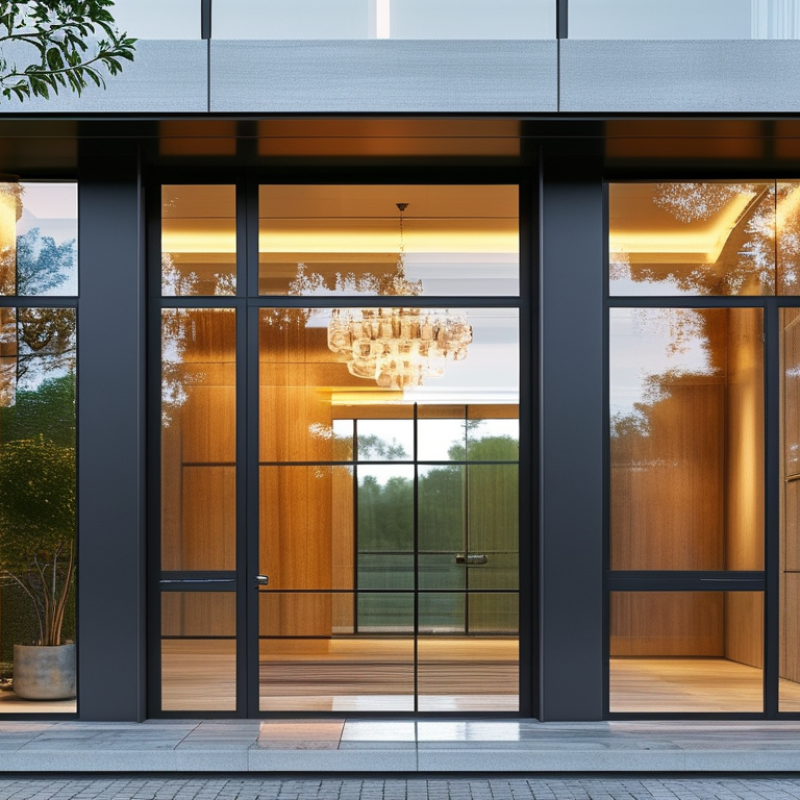
In 2026, high-performing aluminium door profiles will be judged by measured performance, not appearance alone. The International Energy Agency reports that buildings consume about 30% of global final energy. This keeps thermal efficiency central to profile design. Polyamide thermal breaks, insulated chambers, and continuous gaskets reduce heat transfer around the frame. Thermal gaps matter. A slim sightline is valuable, but only when it does not weaken insulation or drainage.
The strongest profiles will also manage air, water, sound, and daily wear. EN 12207 testing classifies air permeability, while EN 12208 evaluates watertightness under pressure. These standards help specifiers compare doors beyond catalogue claims. A well-designed profile should include sloped drainage paths, sealed corner joints, and replaceable weather strips. The World Green Building Council’s circularity guidance also supports greater recycled aluminium use, provided the material has credible chain-of-custody evidence. Recycled content sounds impressive. Verification matters more.
Fabricators may prefer systems that accept automated cutting, thermal-break insertion, and digital quality checks. These steps improve repeatability on large projects. Still, automation cannot correct poor installation. Site observations often reveal uneven thresholds, compressed seals, and missing drainage outlets. That is where theory becomes less comfortable. Acoustic performance also needs caution: the glass, wall junction, and hardware can undermine a capable profile. The 2024 UNEP Global Status Report for Buildings and Construction keeps operational energy and embodied carbon under scrutiny, so future specifications should record both thermal values and material data. No profile performs perfectly in every climate.
Modern door design depends on more than appearance. The right aluminium profile affects insulation, strength, drainage, and daily comfort.
Thermal-break profiles remain a strong choice for heated homes and energy-conscious buildings. Their polyamide barrier reduces heat transfer between the indoor and outdoor aluminium surfaces. This helps limit condensation around the frame. It also improves indoor temperature stability.
Slimline profiles create larger glass areas and sharper sightlines. They suit contemporary apartments, offices, and renovated homes with strong daylight needs. However, narrow sections may provide less space for hardware and drainage channels. They demand accurate fabrication and careful installation. Looks can mislead.
For wider openings, lift-and-slide profiles offer smooth movement and impressive glass coverage. Their reinforced tracks support heavier panels, while multi-point locking improves security. Sliding profiles generally save room because the panels move beside each other. Casement profiles often provide better compression seals and simpler water management. They can be more practical in exposed climates.
Non-thermal profiles may fit interior doors, balconies, or mild environments with limited insulation demands. They usually cost less and can feel lighter during installation. Yet they may transmit outdoor temperatures and noise more easily.
A 2026 specification should consider climate, opening size, glass weight, threshold height, and maintenance access.
Choosing the thinnest profile is not always the most professional decision. Sometimes, a slightly deeper section performs better for years.
What Are the 2026 Top Aluminium Profiles for Doors?
Thermal performance starts with the profile’s overall system, not aluminium alone. Effective thermal breaks reduce heat transfer through the frame. Polyamide barriers, insulated chambers, and continuous gaskets can improve indoor comfort. During site inspections, I check frame joints, drainage paths, and compression marks. Small gaps matter. A quoted low U-value may describe laboratory conditions, not the complete installed door.
Structural performance depends on span, door weight, wind pressure, and opening frequency. Profiles with deeper chambers can improve stiffness, but they may increase weight and material use. Reinforced corners and accurately crimped joints help prevent movement over time. I have seen strong profiles perform poorly because installers rushed alignment. That weakness is easy to miss. Engineers should verify deflection calculations and test the finished assembly, rather than trusting profile dimensions alone.
Security requires more than a thick aluminium wall. Multi-point locking, protected cylinders, reinforced hinges, and secure fixing points must work together. Laminated safety glass can slow forced entry and reduce dangerous breakage. The profile should also resist hardware pull-out under realistic loading. One weak fixing is enough. Independent testing provides useful evidence, but field conditions remain different. Dust, uneven masonry, and repeated slamming can reduce performance. Regular adjustment is often overlooked, especially in busy residential entrances. The most suitable 2026 profile is therefore the one that balances thermal efficiency, structural stability, and verified security for its actual installation.
Reference comparison of thermal, structural, and security performance for common aluminium door profile configurations.
Lower frame Uf values indicate better thermal insulation. Indicative design wind pressure depends on the tested system, door size, hardware, glazing, and installation. Security levels refer to EN 1627 resistance classes and must be confirmed through complete-door testing; the figures shown are representative benchmark values rather than brand or product claims.
Choosing the right aluminium profile for a door begins with its application, not its appearance. Exterior entrance doors need thermally broken profiles, reinforced chambers, and reliable gaskets. These features reduce heat transfer and limit condensation around the frame. The International Energy Agency reports that buildings consume about 30% of global final energy. Door frames cannot solve that problem alone, but poor profiles can worsen it.
Sliding patio doors require different priorities. Deep tracks, larger rollers, and stronger mullions support heavier glazed panels. For narrow interior doors, slim profiles create cleaner sightlines and reduce visual weight. High-traffic entrances need durable hinges, impact-resistant finishes, and tested drainage paths. Aluminium’s corrosion resistance helps in coastal areas, although salt exposure still demands careful surface treatment and maintenance.
Sustainability also affects profile selection. The International Aluminium Institute states that recycled aluminium requires roughly 5% of the energy used for primary aluminium production. That advantage depends on verified material content and responsible processing. It is easy to overvalue recycled content, however. A poorly insulated frame may create higher lifetime energy use. My practical preference is a balanced specification: thermal performance, structural testing, repairability, and documented recycled content. The “top” 2026 profile is not always the thinnest one. Sometimes, it is the profile that survives daily use quietly.
| Door Application | Recommended Aluminium Profile | Common Alloy and Temper | Typical Profile Features | Recommended Door Thickness | Key Performance Priorities | Suitable Environments |
|---|---|---|---|---|---|---|
| Residential hinged entrance doors | Thermally broken door frame and sash profiles | 6063-T5 or 6063-T6 | Multi-chamber frame, polyamide thermal barrier, compression-gasket channels, reinforced hinge zones, and adjustable rebate sections | Approximately 45–75 mm | Thermal insulation, air tightness, water resistance, security, and dimensional stability | Houses, apartments, and low-rise residential buildings |
| Interior room doors | Non-thermal-break narrow-frame profiles | 6063-T5 | Lightweight rectangular or square sections, concealed fixing channels, slim sightlines, and simple glazing or panel rebates | Approximately 30–50 mm | Low weight, clean appearance, corrosion resistance, and easy installation | Bedrooms, offices, corridors, and interior partitions |
| Sliding patio doors | Thermally broken sliding door frame, sash, interlock, and track profiles | 6063-T5 or 6063-T6 | Reinforced meeting stiles, roller-support chambers, drainage paths, brush-seal grooves, and insulated frame cavities | Approximately 60–100 mm | Smooth operation, weather resistance, thermal performance, glazing support, and resistance to wind load | Balconies, patios, terraces, and large residential openings |
| Lift-and-slide doors | Heavy-duty thermally broken lift-and-slide profiles | 6063-T6 for structural sections; 6063-T5 for selected extrusions | Deep sash sections, reinforced rollers, large interlocks, heavy glazing pockets, and high-capacity sill tracks | Approximately 70–120 mm | High load capacity, low operating resistance, weather sealing, and support for large glass panels | Premium residential projects, hotels, and architectural façades |
| Commercial storefront doors | Medium-duty non-thermal-break framing and entrance-door profiles | 6063-T5 | Wide perimeter frames, reinforced stiles, transom compatibility, glazing beads, and continuous hinge or pivot reinforcement | Approximately 45–65 mm | Frequent-use durability, simple fabrication, glass compatibility, and maintainability | Retail shops, restaurants, showrooms, and office entrances |
| High-traffic commercial entrances | Heavy-duty framed door and panic-exit profiles | 6063-T6 | Thickened stiles, reinforced lock pockets, closer reinforcement, kick-plate accommodation, and compatible exit-device channels | Approximately 50–75 mm | Impact resistance, repeated-cycle durability, hardware retention, and safe egress | Schools, hospitals, shopping centers, transport facilities, and public buildings |
| Thermal-break exterior doors | Insulated aluminium frame, sash, threshold, and glazing-bead profiles | 6063-T5 or 6063-T6 with polyamide thermal separators | Polyamide strips commonly around 14.8–34 mm in system designs, insulated chambers, low-conductivity thresholds, and continuous gaskets | Approximately 60–90 mm | Reduced thermal bridging, condensation control, energy efficiency, and weather sealing | Cold, temperate, and mixed climates; heated or air-conditioned buildings |
| Aluminium glass doors | Slim-frame glazing profiles with compatible glazing beads | 6063-T5 | Minimal sightlines, precise glazing pockets, EPDM or elastomeric gasket channels, and concealed corner connections | Approximately 35–60 mm | Maximum glazed area, appearance, glass retention, and accurate alignment | Modern homes, offices, hotels, galleries, and interior partitions |
| Fire-rated or smoke-control doors | Tested aluminium door framing used as part of a certified door assembly | System-specific aluminium alloy and temper; alloy selection alone does not determine fire rating | Fire-resistant infill compatibility, protected hardware zones, controlled clearances, intumescent-seal provisions, and certified glazing interfaces | Project-specific | Fire integrity, insulation, smoke control, hardware compatibility, and certified installation | Stairwells, corridors, hospitals, schools, and commercial buildings |
| Security and reinforced entrance doors | Reinforced aluminium frame and sash profiles with steel or aluminium inserts | 6063-T6 for extruded sections; reinforcement selected according to design loads | Deep lock stiles, anti-pry rebates, reinforced hinge areas, multi-point-lock provisions, and laminated-glass support | Approximately 60–100 mm | Resistance to forced entry, hardware strength, impact resistance, and frame rigidity | Residential entrances, financial facilities, utility buildings, and controlled-access areas |
| Folding or bi-fold doors | Thermally broken folding-door frame, sash, hinge, and track profiles | 6063-T5 or 6063-T6 | Lightweight sash sections, hinge-reinforced chambers, top or bottom rolling tracks, drainage channels, and folding-panel interlocks | Approximately 50–80 mm | Low panel weight, accurate stacking, smooth movement, weather resistance, and hinge durability | Residential terraces, restaurants, cafés, and flexible meeting spaces |
| Industrial and workshop doors | Robust non-thermal-break frame and panel-edge profiles | 6063-T5 or 6063-T6 | Thick-wall sections, wide panel rebates, replaceable seals, protective lower sections, and mechanical-fixing channels | Approximately 45–100 mm | Impact resistance, easy repair, corrosion resistance, and compatibility with functional hardware | Workshops, warehouses, service areas, and light industrial facilities |
| Wet-area and coastal doors | Corrosion-resistant aluminium frame profiles with durable surface finishing | 6063-T5 or 6063-T6 | Sloped drainage details, sealed joints, corrosion-resistant fasteners, durable gaskets, and finishes suitable for humid or saline exposure | Approximately 40–75 mm | Corrosion resistance, drainage, seal durability, and surface-finish stability | Bathrooms, pool facilities, coastal buildings, marinas, and humid climates |
Choosing the Right 2026 Aluminium Profile for Your Project
In 2026, the best aluminium door profile is not always the thinnest one. Project conditions matter more. Thermal-break profiles suit homes, offices, and buildings facing seasonal temperature changes. They reduce heat transfer between indoor and outdoor surfaces. For large openings, lift-and-slide profiles offer wide glass areas and smooth movement. Slimline systems create a cleaner view, but they may require stronger glass and careful installation.
Consider the door size, glass weight, exposure to wind, drainage, and daily use. A coastal project needs durable surface protection and reliable drainage details. A busy entrance needs strong rollers, accurate hinges, and replaceable seals. Ask for tested air, water, and wind performance. Check the thermal values, but do not judge efficiency from one number alone. Frame depth, glass choice, and installation quality also affect results. I have seen attractive profiles fail because the threshold was poorly fitted. Appearance cannot repair poor detailing.
Tips: Measure the opening twice. Confirm local performance requirements before ordering. Request corner samples and inspect the gasket fit by hand. Leave room for adjustment during installation. Compare whole-door performance, not only the aluminium section. A cheaper profile may become expensive after difficult repairs. Also, allow for future seal replacement. That detail is easy to forget.