RQ-2
RQ-3
RQ-1
RQ-4

Why Choose Aluminium Railing Profiles for Global Projects?

Why Choose Aluminium Railing Profiles for Global Projects?

Global construction projects face demanding conditions. Coastal salt, intense sunlight, freezing temperatures, and heavy public use can challenge every railing system. Aluminium Railing Profiles offer a practical balance of strength, low weight, corrosion resistance, and design flexibility. They can support clean lines on airports, balconies, bridges, hotels, and residential towers.

Architectural materials specialist Michael Ramage has observed, “Good materials should do more than look good; they should age with dignity.” This principle matters when a railing must remain secure and presentable for years. Aluminium profiles can be anodized or powder coated for additional surface protection. Their lighter weight can also simplify transport, handling, and installation across different regions. That saves effort.

However, choosing aluminium should not become an automatic decision. Profile thickness, alloy selection, fastening methods, drainage, and coating quality require careful review. A system designed for a dry inland city may perform differently beside a humid coastline. Local wind loads and building standards also need professional evaluation. One profile cannot solve every problem.

Experienced project teams usually examine the complete lifecycle. They compare fabrication accuracy, replacement access, maintenance needs, and long-term appearance. They also check whether suppliers can provide consistent dimensions across multiple production batches. Small gaps can become visible after installation. Minor planning mistakes can become expensive.

This guide explains why Aluminium Railing Profiles remain valuable for global projects. It also considers their limitations, so decision-makers can choose with clearer expectations and stronger technical judgment.
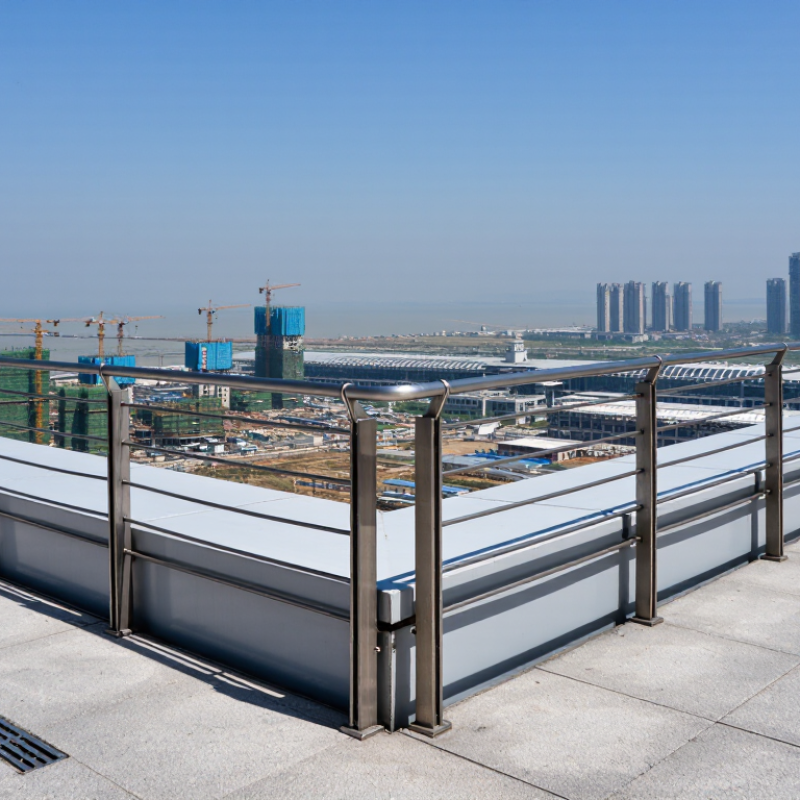
Why Choose Aluminium Railing Profiles for Global Projects?

What Are Aluminium Railing Profiles?

Aluminium railing profiles are engineered sections used to build balustrades, handrails, posts, and frame systems. They are commonly formed through extrusion, forcing heated aluminium through a shaped die. This process creates consistent dimensions and internal channels for brackets, fasteners, or drainage paths.

A typical profile may look simple from the outside. Its strength often depends on wall thickness, alloy selection, cross-section shape, and support spacing. Hollow chambers can reduce weight while maintaining useful rigidity.

In practice, designers connect posts to slabs, stairs, or steel structures using plates, anchors, and concealed fittings. Glass, cable, or vertical infill can then fit into dedicated grooves.

Aluminium profiles suit many global projects because they are light, corrosion-resistant, and easier to transport than heavier metal systems. Powder coating or anodising can add surface protection and colour, but neither finish makes the railing maintenance-free. Coastal air, trapped moisture, and incompatible fasteners still require attention. This is where specifications matter.

Regional building codes may require different load capacities, guard heights, opening limits, and testing methods. A profile that performs well in one location may need redesign elsewhere. Engineers should verify calculations, fixing conditions, thermal movement, and drainage before production.

A common mistake is choosing a decorative section first, then discovering that its connection detail is inadequate. It looks fine. It may not be safe.

How Are Aluminium Railing Profiles Designed and Manufactured?

Aluminium railing profiles begin with a load path, not a catalogue shape. Designers map handrail, post, bracket, slab, and anchor forces before choosing a cross-section. Wind, crowd pressure, impact, span, drainage, and thermal movement must be checked together. Project engineers then verify local codes and relevant structural standards. Details matter. According to the U.S. Geological Survey’s Mineral Commodity Summaries 2024, global primary aluminium output reached about 70 million metric tons in 2023. This scale supports supply, but it does not guarantee quality.

Manufacturing usually starts with alloy billets heated and pushed through a precision die. Common architectural alloys balance strength, corrosion resistance, and extrudability. After extrusion, profiles are stretched, cut, aged, and machined for joints or concealed fasteners. Surface treatment follows. Anodizing creates a controlled oxide layer, while powder coating adds colour and protection. Coating thickness, pretreatment, and edge coverage need documented checks. Small defects can become visible on a sunlit balcony. The International Aluminium Institute reports that recycled aluminium uses roughly 5% of the energy required for primary metal. That figure encourages recycled content, though alloy sorting and traceability remain practical challenges.

Quality control should include dimensional sampling, alloy certificates, coating tests, and load verification. Installers also need clear tolerances, anchor instructions, and drainage guidance. A perfect drawing rarely survives the site. Unexpected slabs, salt air, or uneven substrates expose weak assumptions. Design teams should record these lessons and revise the next profile. That is where global consistency is earned.

Which Performance Benefits Suit Global Construction Projects?

On global construction sites, railing performance is rarely judged by appearance alone. Installers need predictable handling, stable connections, and surfaces that survive daily exposure. Aluminium helps on all three fronts. Its low density can reduce lifting effort and simplify transport between fabrication shops and remote sites. That matters when cranes are busy or access is restricted. Profiles can also support modular fabrication, helping teams maintain consistent dimensions across large projects.

Corrosion resistance is another practical advantage, especially in humid, coastal, or industrial environments. However, it is not automatic. Engineers should match the alloy, surface treatment, fasteners, and drainage details to the local atmosphere. A poorly isolated stainless-steel connection may still create staining or galvanic corrosion. Regular inspection remains sensible, even when maintenance demands are low. Powder-coated surfaces can provide durable colour and added protection, but coating quality depends on preparation, curing, and site handling.

For wind-exposed balconies, public walkways, and commercial buildings, aluminium profiles offer useful design flexibility. Their strength-to-weight ratio can support slender visual lines without creating unnecessary structural mass. Project teams must still verify span limits, deflection, impact resistance, and fixing performance against applicable regional requirements. Thermal movement also deserves attention across hot and cold climates. Small installation assumptions can become expensive later. In practice, the best results come from coordinated drawings, tested connections, and installers who understand the system rather than simply following a catalogue dimension.

Why Choose Aluminium Railing Profiles for Global Projects?

Lower material density helps reduce profile weight, simplify handling, and improve shipping efficiency across international construction projects.

Representative density values: aluminium alloy 6063-T5 ≈ 2,700 kg/m³, carbon steel ≈ 7,850 kg/m³, and stainless steel 304 ≈ 8,000 kg/m³. By density alone, an equal-volume aluminium profile is approximately 66% lighter than carbon steel and 66% lighter than stainless steel. Actual project performance also depends on profile geometry, alloy temper, span, loads, and local building requirements.

How Do Aluminium Railing Systems Meet International Standards?

International projects do not accept an aluminium railing system based on appearance alone. They require documented performance, tested materials, and compliance with local regulations. Designers may reference standards such as EN, ASTM, ISO, or regional building codes. The applicable standard depends on the project location and building use. A system should demonstrate resistance to wind loads, impact, corrosion, and repeated handrail pressure. Accessibility requirements also influence handrail height, clearance, and gripping shape.

Small details matter. Practical project reviews often reveal problems around fasteners, drainage, and installation tolerances. Aluminium profiles should match the specified alloy and temper. Connections need suitable stainless-steel hardware to reduce galvanic corrosion. In coastal areas, protective finishes require careful preparation and quality control. Powder coating performance should be supported by relevant testing, not only a sales statement. Salt-spray results can help, but they do not replace real environmental assessment.

Documentation matters. A reliable supplier provides drawings, material certificates, coating data, load calculations, and inspection records. These documents help engineers verify compliance before installation and during handover. Site teams also need clear instructions for cutting, alignment, anchoring, and sealant use. One weakness remains common: projects sometimes treat certification as universal proof. It is not. A railing approved for one market may still need redesign for another. Early review with a qualified local engineer remains essential, especially when unusual spans, heavy public traffic, or severe weather conditions are involved.

Why Choose Aluminium Railing Profiles for Global Projects? How Do Aluminium Railing Systems Meet International Standards?
Evaluation Dimension Reference Data or Standard What It Means for Aluminium Railing Systems Typical Project Verification Global Project Benefit
Material Density Approximately 2.70 g/cm³ for aluminium Aluminium is substantially lighter than common structural steels, which can reduce handling loads and simplify installation. Confirm the alloy, temper, profile mass per metre, and connection design in the technical submittal. Lower transportation and installation effort, especially for modular or elevated projects.
Elastic Modulus Approximately 69 GPa for aluminium alloys Because aluminium is less stiff than steel, profile geometry, span, support spacing, and deflection limits must be engineered carefully. Check structural calculations for bending, deflection, fasteners, brackets, and base connections. Supports lightweight designs while maintaining performance through appropriate profile sizing.
Thermal Expansion Approximately 23.1 × 10⁻⁶/K Long railing runs can experience measurable movement as temperatures change. Provide movement joints, slotted fixing points, suitable tolerances, and compatible connection details where required. Helps prevent stress, distortion, noise, and damage in climates with large temperature variations.
Profile Dimensional Quality EN 755: Aluminium and aluminium alloys — extruded rod/bar, tube and profiles; EN 12020 may apply to certain precision extruded profiles These standards define relevant requirements for extrusion dimensions, tolerances, and product characteristics according to the applicable product category. Review extrusion drawings, dimensional tolerances, inspection records, and material certificates. Improves interchangeability and consistency across international fabrication and installation teams.
Structural Design Basis EN 1999-1-1 for the structural use of aluminium in Eurocode-based projects Provides a recognized design framework for resistance, stability, connections, and serviceability of aluminium structures. Have a qualified engineer verify loads, load combinations, deflection, local buckling, and connection resistance. Creates a transparent engineering basis for projects using European design requirements.
Alternative Product Specification ASTM B221 covers aluminium-alloy extruded bars, rods, wire, profiles, and tubes Provides a recognized specification route for qualifying extruded aluminium products in projects using ASTM-based documentation. Specify alloy, temper, dimensions, mechanical requirements, testing, and acceptance criteria in the purchase documents. Facilitates procurement and technical review in markets using ASTM references.
Mechanical Strength Depends on alloy, temper, wall thickness, welding, holes, connections, and manufacturing process There is no single strength value for all aluminium railing profiles; the design value must be based on the exact product and condition. Request mill certificates, tensile-test data where specified, and project-specific structural calculations. Reduces the risk of applying generic material data to a safety-critical railing assembly.
Corrosion Resistance Aluminium naturally forms a thin protective oxide layer; performance still depends on alloy, environment, finish, and detailing. Suitable surface treatment and drainage design can support long-term performance in many indoor and outdoor environments. Assess exposure to coastal salt, industrial pollutants, de-icing salts, trapped moisture, and dissimilar metals. Can reduce routine maintenance when the finish and environmental classification are correctly selected.
Coating and Anodizing Common project specifications may reference ISO 7599 for anodic oxidation or ISO 28340 for anodic oxidation coatings; powder-coating requirements vary by region and system. Surface treatment should be selected according to appearance, UV exposure, humidity, pollution, and expected service conditions. Define coating thickness, colour tolerance, pretreatment, adhesion, curing, and sample approval requirements. Provides more consistent appearance and durability across different climates and locations.
Salt-Spray Testing ISO 9227 specifies neutral salt spray, acetic acid salt spray, and copper-accelerated acetic acid salt spray test methods. Salt-spray results are useful for comparing coated specimens but do not by themselves predict every outdoor service environment. Specify the test method, exposure duration, panel preparation, scribe requirements, and acceptance criteria. Improves coating-quality control for marine or high-humidity projects when interpreted with field conditions.
Reaction to Fire EN 13501-1 classifies the reaction to fire performance of construction products and building elements under the applicable European system. Uncoated aluminium is non-combustible in practical building-product contexts, but complete railing assemblies may include coatings, plastics, seals, glass, or composite components. Evaluate the full assembly and confirm the classification required by the local building authority. Supports fire-safety documentation without assuming that every component has identical fire performance.
Wind and Service Loads Load requirements are project- and jurisdiction-specific; examples include EN 1991-1-1, EN 1991-1-4, and local building codes. Railing profiles must resist horizontal loads, wind actions, impact considerations, and applicable self-weight effects. Confirm occupancy category, design loads, span, support spacing, glass or infill type, and anchorage capacity. Allows one railing concept to be adapted to different site conditions through documented engineering.
Glass and Infill Compatibility Requirements depend on the selected glass, panel, cable, or bar infill system and the governing local regulations. Profile grooves, gaskets, setting blocks, drainage, edge clearances, and retention details must match the infill specification. Review system drawings, glass calculations, safety-glazing requirements, and installation tolerances. Reduces interface problems between aluminium profiles and locally sourced infill materials.
Fastener and Dissimilar-Metal Control Galvanic corrosion risk depends on metal combinations, electrolyte exposure, area ratio, coating condition, and electrical contact. Stainless-steel fasteners, isolating washers, sealants, drainage, and compatible finishes may be required. Confirm fastener grade, isolation method, torque, embedment, edge distance, and compatibility with the substrate. Improves connection durability in wet, coastal, and chemically aggressive environments.
Quality Documentation Relevant documentation may include drawings, material certificates, coating reports, inspection plans, test reports, and installation records. Traceability connects the supplied profiles and components to the approved design and specified performance. Use lot identification, inspection checklists, sample approvals, nonconformance records, and final handover documents. Supports consistent quality control across suppliers, contractors, and countries.
Compliance Principle No single international standard covers every aluminium railing application worldwide. The applicable requirements are determined by the project location, building type, loading conditions, fire rules, accessibility provisions, and contract specifications. Prepare a project compliance matrix before design approval and confirm requirements with the responsible engineer or authority having jurisdiction. Prevents incorrect cross-border assumptions and provides a clear route to approval.
Important: The values and standards above are general technical references. Final profile selection, dimensions, loads, connections, coatings, fire classification, and installation details must be verified for the specific project, jurisdiction, environment, and complete railing assembly.

What Factors Guide Profile Selection for Different Projects?

Why Choose Aluminium Railing Profiles for Global Projects?

What Factors Guide Profile Selection for Different Projects?

Choosing an aluminium railing profile starts with the project’s actual demands, not appearance alone. A coastal walkway needs strong resistance to salt, moisture, and frequent cleaning. An inland office may require lighter sections and a more refined finish. Temperature changes also matter, especially on long balconies or exposed platforms. Movement can create stress at joints.

Safety remains the controlling factor. Engineers should check height, spacing, impact loads, fixing methods, and local building requirements. A profile that suits a private terrace may fail to meet standards in a school or transport facility. Wall thickness, alloy performance, and connection design influence both stability and service life. Looks matter.

Installation conditions guide the choice as well. Remote projects may need profiles that are easy to cut, align, and transport. Complex corners require accurate connectors and tolerances that installers can manage on site. Powder coating can support color consistency, but the specified finish must match the environment and maintenance plan. A darker surface may show scratches sooner. That detail matters. Project teams should also review drainage, water traps, access for repairs, and compatibility with glass or panels. Sometimes, the most elegant profile creates difficult installation work. Rechecking the details early can prevent expensive changes later.

Please feel free to contact us