


RQ-2
RQ-3
RQ-1
RQ-4

China Top Aluminium Corrosion Protection Suppliers

China’s aluminium sector spans smelters, fabricators, coating specialists, and surface-treatment providers. For buyers, choosing an Aluminium Corrosion Protection supplier is not merely a price comparison. It is a decision about service life, process control, and consistent performance in real environments, from humid coastal air to industrial washdown areas.

The International Aluminium Institute reported global primary aluminium production of about 70.6 million tonnes in 2023. That scale makes durable protection increasingly important across construction, transport, and manufacturing. A separate industry benchmark, NACE International’s 2016 IMPACT study, estimated that corrosion costs the global economy US$2.5 trillion annually, or 3.4% of global GDP. These figures describe corrosion broadly; they are not aluminium-specific. That distinction matters.

This guide examines China-based suppliers through practical criteria: coating technologies, pretreatment quality, testing capability, documented specifications, and experience with particular applications. Ask how a supplier tests adhesion, coating thickness, and exposure resistance. Request product data and project references, not just polished sample panels. A sample can look convincing. Long-term performance is harder to judge. Even established suppliers may differ in process consistency, and published claims do not replace independent verification. There is no universal coating for every alloy, climate, or service condition. The right shortlist begins with clear operating requirements and evidence that matches them.
China Top Aluminium Corrosion Protection Suppliers

Aluminium Corrosion Basics: Passive Oxide Films, Pitting, and Galvanic Attack

Aluminium resists corrosion because its surface quickly forms a thin aluminium oxide film. That film is thin, but it slows further attack when the surface stays intact and exposed to oxygen. Scratches often re-oxidise naturally. The protection is not perfect, though. Chloride salts from coastal air or de-icing spray can break down the film at isolated points, creating pits. These small cavities may deepen while the surrounding surface still looks sound. A quick visual check can miss early damage.

Galvanic attack needs an electrical connection between different metals and a conductive liquid, such as salty water. If aluminium touches stainless steel or copper in a wet joint, aluminium may corrode faster, especially when its exposed area is small compared with the other metal. Insulating washers, compatible fasteners, drainage, and sealed joints help reduce risk. Details matter. A coating can conceal early corrosion, so inspection still counts. When evaluating protection suppliers, ask how they prepare aluminium, control coating thickness, and address dissimilar-metal contacts. Ask for test conditions too; a salt-spray result alone does not predict service life. Real installations are messy, and one specification rarely fits every site.

Protection Methods in China: Anodizing, Conversion Coatings, and Powder Coatings

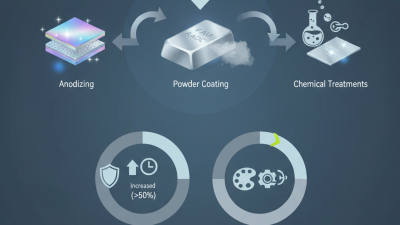
China’s aluminium corrosion protection suppliers commonly use three methods: anodizing, conversion coatings, and powder coatings. Each suits a different surface need. Anodizing thickens the natural oxide layer, helping resist abrasion and outdoor exposure. Clear or dyed finishes can preserve the visible metal texture. Yet sharp edges and poorly sealed pores may become weak points. Small details matter.

Conversion coatings form a thin chemical layer that improves paint adhesion and can offer temporary corrosion resistance. They suit complex shapes where uniform coverage is difficult with thicker films. Powder coatings add a durable polymer finish, often chosen for colour consistency and impact resistance. AMPP’s 2016 IMPACT study estimated global corrosion costs at US$2.5 trillion annually, about 3.4% of global GDP. This is not aluminium-specific, but it shows the scale of the issue.

For Chinese projects, request coating thickness, pretreatment details, and test results for the actual alloy and service environment. Ask for salt-spray hours, but do not treat them as a service-life promise. Inspect edges, fasteners, and cut surfaces closely. I would question any specification that names a coating but omits edge preparation. Sometimes the paperwork looks complete. Then one drainage pocket changes everything.

Anodizing Benchmarks: ISO 7599 Coating Classes Range from 5 to 25 μm

ISO 7599 provides a useful framework for specifying decorative and protective anodic coatings on aluminium. Its thickness classes commonly span 5, 10, 15, 20, and 25 μm. The class refers to a minimum average coating thickness, not a promise that every point has identical coverage. Small details matter.

A 5 μm coating may suit mild indoor conditions, while thicker classes are often considered for more demanding exposure or greater wear. The right choice still depends on the alloy, surface preparation, sealing, and service environment. A number alone can mislead. On a finished part, coating thickness should be checked at several representative areas with a suitable calibrated gauge; edges and recesses may behave differently. Buyers should state the required class, finish, and verification method on drawings or purchase specifications. In practice, specifying 25 μm everywhere is not automatically better: appearance, dimensional fit, and process consistency also deserve attention. Supplier capability varies, and a tidy certificate cannot replace clear acceptance criteria.

China Top Aluminium Corrosion Protection Suppliers - Anodizing Benchmarks: ISO 7599 Coating Classes Range from 5 to 25 μm

ISO 7599 anodizing coating classes are identified by the minimum average coating thickness. The minimum local thickness is typically 80% of the specified average thickness, providing a practical benchmark for corrosion protection and surface durability.

Reference: ISO 7599 anodic oxidation coating thickness classes. Thickness values are expressed in micrometres (μm).

Supplier Testing: How ISO 9227 Salt-Spray Reports Support Performance Claims

China Top Aluminium Corrosion Protection Suppliers

When evaluating aluminium corrosion protection suppliers in China, ISO 9227 reports offer useful, comparable evidence. Yet, a salt-spray result is not a lifetime guarantee. It measures controlled resistance under a demanding, artificial environment.

A credible supplier report should identify the test method, chamber conditions, exposure time, and specimen dimensions. It should also record alloy grade, surface preparation, coating thickness, sealing process, and scribe design. These details matter. A 1,000-hour result means little when panel preparation remains unclear. I look for dated photographs, calibration records, and an independent laboratory signature. Those items make performance claims easier to trace and challenge.

Testing experience also reveals small weaknesses. Salt concentration may drift. Edge protection can distort results. Different inspectors may measure creepage differently. A careful supplier should disclose these limitations instead of presenting one impressive number. Buyers can request duplicate panels, raw observations, and results from multiple production batches. Still, ISO 9227 should support, not replace, field exposure, humidity testing, and coating adhesion checks. One report can guide a decision. It cannot answer every service question.

Comparing China’s Suppliers by Process Control, Certifications, and Application Experience

China’s leading aluminium corrosion protection suppliers should be assessed beyond catalog claims. Process control shows how consistently a coating survives production and service conditions. Experienced facilities record bath temperature, pH, conductivity, and treatment time for every batch. Operators also monitor anodizing current, coating thickness, sealing quality, and surface cleanliness. Small variations can create visible color differences or early corrosion.

Certifications provide useful evidence, but they are not complete proof. ISO 9001 can indicate controlled documentation and corrective action systems. ISO 14001 may reflect stronger environmental management practices. Product testing should include coating thickness, adhesion, hardness, and salt spray performance when relevant. Reliable suppliers share test methods, sampling plans, and inspection records. Some reports look impressive. Their details may still be too limited.

Application experience matters when aluminium faces salt air, humidity, chemicals, or frequent handling. A supplier familiar with coastal façades may recommend different pretreatment than one serving indoor equipment. Ask for anonymized project examples, failure analysis, and maintenance feedback. Factory visits can reveal practical habits, such as sealed storage and calibrated measuring tools. Not everything is perfect. Even capable suppliers may struggle with unusual alloys, sharp profiles, or urgent design changes. Their response to these weaknesses often shows more expertise than polished sales material.

China Top Aluminium Corrosion Protection Suppliers - Comparing China’s Suppliers by Process Control, Certifications, and Application Experience

Supplier-specific scores are not presented because they require independently verified supplier records. Use this comparison framework to evaluate documented capabilities and match them to your application.

Comparison dimension What to compare Evidence to request from each supplier Why it matters
Process capability Available processes, such as anodizing, conversion coating, or organic coating; supported alloy and part-size range. Process flow, equipment list, capability limits, and examples for the same alloy, geometry, and finish requirement. A suitable process depends on the aluminium alloy, component design, environment, appearance, and required service life.
Pretreatment control Cleaning, etching or deoxidizing, rinsing, and surface preparation before the protective finish is applied. Work instructions, bath-monitoring records, rinse-water controls, and inspection or test records for pretreatment. Inadequate preparation can impair coating adhesion and corrosion performance.
Bath and line monitoring How the supplier monitors relevant process variables, such as bath chemistry, temperature, time, and line conditions. Control plans, measurement frequency, equipment calibration records, corrective-action procedure, and recent anonymized batch logs. Consistent monitoring helps control variation between production batches.
Coating thickness and uniformity Specified coating thickness, measurement method, sampling plan, and controls for edges, recesses, and complex shapes. Customer-approved specifications, sample inspection reports, instrument details, and calibration records. ISO 2360 describes a non-destructive eddy-current method for measuring non-conductive coatings on non-magnetic conductive base materials. Thickness and coverage requirements depend on the coating process, component geometry, and end-use specification.
Corrosion testing Test method, exposure conditions, acceptance criteria, sample preparation, and reporting of results. Recent test reports linked to the relevant finish and specification. ISO 9227 specifies neutral salt spray, acetic acid salt spray, and copper-accelerated acetic acid salt spray tests. Salt-spray results are comparative test data and should not be treated as a direct prediction of field service life.
Applicable standards Whether the supplier can work to the exact customer, industry, or product specification and revision. A compliance matrix, controlled copies or references to applicable standards, and inspection records showing how requirements are verified. ISO 7599 provides specifications for anodizing of aluminium and its alloys for decorative and protective purposes. Standards define methods or requirements; the project specification should state the applicable edition, acceptance limits, and required tests.
Management-system certification Certification scope, issuing certification body, validity, site coverage, and whether the relevant finishing operation is included. A current certificate and independent verification of its status and scope. ISO 9001 relates to quality management systems; ISO 14001 relates to environmental management systems. A management-system certificate does not by itself certify a particular coating or guarantee its corrosion performance.
Application experience Relevant experience with comparable industries, exposure conditions, alloys, part designs, and production volumes. Anonymized case studies, reference samples, approved-part history, and documented examples of resolving coating defects or field issues. Comparable application history can help identify risks that may not appear in a general capability statement.
Traceability and change control Ability to connect parts to production batches and notify customers of material, process, or site changes. Batch identification examples, retained-record policy, nonconformance procedure, and documented change-notification process. Traceability supports investigation, containment, and consistent production after process changes.

Please feel free to contact us